Child labour and it’s evil effect!!!

What is child labour?

The term “child labour” is often defined as work that deprives children of their childhood, their potential and their dignity, and that is harmful to physical and mental development.

Types of Child Labour in India:-
Child labors in India could be mainly classified into two categories of industrial, domestic and bonded child labors. Below we will go through the details of the mentioned Indian sectors employing children as labors along with the demographics.

1) Industrial Child Labor

Industrial sector in India is the largest employer of children below the legal age of 18. Approximately, over 10 Million children between the age group of 5 to 14 years are working in informal or small industries, including around 4.5 Million girls. Small enterprises like garment industry, brick kiln, agriculture, fireworks industries, diamond industries etc, constitute some of the largest employer of children. Sometimes such industries operate from homes, making it difficult for the authorities to take appropriate actions.

Unorganized sector in India is one of the largest employers of children and the most visible too. Children could be easily spotted, working in road side dhabas and eateries, tea shops or grocery stores. The owners of such small businesses prefer children as they are easy to handle and easy to fire.

2) Domestic Child Labor

Domestic child labors constitute 10% of the total child labors in India. They include both boys and girls domestically employed by wealthy families to look after their everyday chorus. Such children have no option but to serve the needs of other families in an age when they should be attending school and playing with friends. Poverty is the main factor behind children being employed as domestic help. Usually the parents give their consent in hope of money and a stable shelter for their children.

The statics reveal a grim picture – nearly 20% of all the domestic workers employed are below the age of 14 years and the figures include mainly girls. These children are employed as live in servants, doing daily chorus of the family like – washing, cooking, looking after pets or younger children and other works.

3) Bonded Child Labors

Bonded child labour means as a child who is employed forcibly to pay off a debt of his parents or a guardian. Though the numbers of bonded child labors have considerably declined in recent past due strict government supervision and laws banning it, it is silently followed in isolated and remote places.

Children residing in villages and employed in agriculture industry are more prone to this type of labor. Poor farmers owing large debts to money lenders, often get into an agreement to engage their siblings as labors to wealthy money lenders. There were thousands of bonded labors engaged in various industries, till the past decade, but today the numbers have reduced drastically, and the government claims that there are no more bonded child labors in India.


Causes of child labour..

Children are most often involved in child labour because their parents or guardians consider it ‘normal’ for children to work, and sometimes for children’s own survival and that of their families. When talking about child labour, it is important to understand it from the perspective of the children, families and communities themselves. Below are some of the root causes which make children particularly vulnerable to child labour.

Poverty:-

‘Poverty is certainly the greatest single force driving children into the workplace.’ When families cannot afford to meet their basic needs like food, water, education or health care, they have no choice but to send their children to work to supplement the household income. Poverty is considered as one of the most important causes of child labour as it is linked to other driving factors including: low literarcy and numeracy rates, lack of decent work opportunities, natural disasters and climate change, conflicts and mass displacement. Poverty and child labour form a vicious cycle, without tackling one, we cannot eradicate the other.

Lack of access to quality education:-

‘The availability and quality of schooling is among the most important factors.’ School needs to be a welcoming environment, with appropriate class sizes, a curriculum designed for the local context, and affordable for rural communities. Getting children into school and out of harmful work is one thing but keeping them there a means creating quality education accessible for all.

Poor access to decent work;-

‘Children who were involved in child labour often lack the basic educational grounding which would enable them to acquire skills and to improve their prospects for a decent adult working life.’ If young people cannot access work which is safe, with social protection, fair pay, equality for men and women and which provides a space for workers to express their opinions, they often have no choice but to do work which is hazardous. When children above the minimum working age are doing hazardous work, this is also considered child labour.

Limited understanding of child labour:-

‘The view that work is good for the character-building and skill development of children.’ When families do not understand the dangers of child labour, and how these impact on the health, safety, well-being and future of their child, they are more likely to send their children to work. Some cultural beliefs and social norms can also be drivers of child labour.

Natural disasters & climate change:-

‘In rural areas, farmers who see their crops destroyed on account of climate changes have no other choice but to send their children out to work.’ The effects of natural disasters and climate change is one which is becoming of increasing concern. Rural families who depend on reliable seasons for farming are particularly vulnerable to altered patterns of rainfall, soil erosion, or extreme weather. When crops are destroyed or farming land is ruined, families struggle to make a living and are more likely to send their children to work in neighbouring farms.

Conflicts & mass migration:-

‘There is a strong correlation between child labour and situations of conflict and disaster’ According to the ILO children make up more than half of the total number of people displaced by war. These children are particularly vulnerable to forms of exploitation, including child labour, due to an increase in economic shocks, a breakdown of social support, education and basic services, and disruption of child protection services. The incidence of child labour in countries affected by conflict is almost twice as high as the global average. Children are also vulnerable to becoming involved in armed conflict, this is considered one of the Worst Forms of Child Labour.

Impacts of Child Labor:

Poor Physical and Mental Health:

Children at such a young age are gullible and vulnerable. Child labor affects their physical, mental, and emotional health in a severe way. They are deprived of their basic rights to education. Arduous physical strain and the burden of arranging their own food cause malnutrition in them.

Forced Maturity:

In order to survive in this world, they tend to become mature faster than they need to. Their childhood is lost and crushed with the bitter pressure of acting like an adult. The kind of affection and love needed at such a tender age is never available to them. Both parents and the owners are often highly demanding to them.

Physical Abuse:

Such consistent threats keep the children in a frightening state of mind all the time. There are increased chances of physical abuse. To cope up with these pressures, girls and boys fall victims to the drug abuse. Many more dangerous habits become a normal part of their lives.

Addiction and Sexual Abuse:

From taking drugs to selling them, alcohol addiction, sexually transmitted diseases, rape, emotional numbness, violence, are common things that surround their living conditions. Poor kids may also catch up these habits from their own parents or localities, where their parents or friends are showing these behaviors on a regular basis.

The situation becomes worse if these kids are physically handicapped. In villages and low-income groups, the adults struggle to arrange a proper livelihood for themselves. So, they begin to see girls and handicapped children as nothing more than a baggage. As a result, girls are sold off to marry old men and the kids are left to beg on the streets.

Central Government Act:-

Section 14(1) in the Child Labour (Prohibition and Regulation) Act, 1986
(1) Whoever employs any child or permits any child to work in contravention of the provisions of section 3 shall be punishable with imprisonment for a term which shall not be less than three months but which may extend to one year or with fine which shall not be less than ten thousand rupees but which may extend to twenty thousand rupees or with both

Source:- learning with each other…..

Social media: Definition

What’s happening in Manipur | Women’s Sexual Assault

..The most heartless person, who killed his loving parents..!!

27-year-old man in Bengaluru allegedly murdered his parents on Monday night before locking up their house and escaping.

The incident occurred in Kodigehalli, where Bhaskar (61) and Shantha (60) lived with their youngest son Sharath. Shantha was a retired central government employee, while Bhaskar worked as a cashier at a canteen in Khanija Bhavan. Though the family was native to Mangaluru, they had lived in Bengaluru for nearly 12 years and had two sons – Sajith (32) and Sharath.

Sharath was tracked down in the Madikeri forest area on Thursday evening after police analyzed CCTV footage to trace his movements. He left his Bengaluru home on the night of the murders.

Sharath disappeared from his Kodigehalli home on July 17, hours before his parents’ bodies were found on July 18. His brother Sajit Suvarna, 32, who lived nearby, visited the house after his sister was unable to contact their parents.

Sajit found the house locked from outside. A room occupied by Sharath on the terrace was also locked. Inside, he found his father Bhaskar Suvarna, 61, a canteen cashier, lying in a pool of blood. His mother Shanta Suvarna, 60, a retired government employee, was dead in a bedroom. Both had head injuries likely from a blunt weapon.

Sharath, who is suspected to be mentally unstable, wandered nearly 40 km around Bengaluru before boarding a bus to Dakshina Kannada. He was spotted getting off at Puttur and reaching Madikeri, where he entered the forest region and attempted to set camp despite leech bites, police sources said. Locals tipped off police about his location.

“The suspect has been secured,” said DCP Northeast B M Laxmi Prasad on Friday.

Source: Local Reports, Publishing and Ground Reports

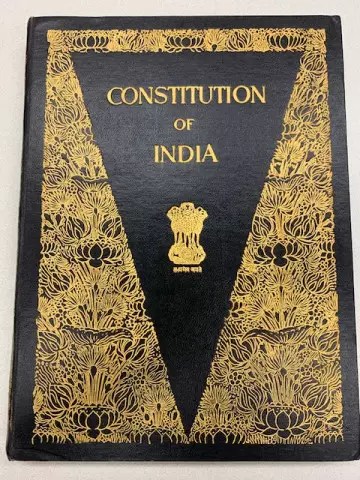
What constitution speak about women safety (specially RAPE)??

What’s happening in Manipur | Women’s Sexual Assault

Social media: Definition

Social media is a collective term for websites and applications that focus on communication, community-based input, interaction, content-sharing and collaboration.

Why people interact to social media??

People use social media to stay in touch and interact with friends, family and various communities. Businesses use social applications to market and promote their products and track customer concerns.

Benefit of social media…. User visibility. Social platforms let people easily communicate and exchange ideas or content.
Business and product marketing. These platforms enable businesses to quickly publicize their products and services to a broad audience. Businesses can also use social media to maintain a following and test new markets. In some cases, the content created on social media is the product.
Audience building. Social media helps entrepreneurs and artists build an audience for their work. In some cases, social media has eliminated the need for a distributor, because anyone can upload their content and transact business online. For example, an amateur musician can post a song on Facebook, get instant visibility among their network of friends, who in turn share it on their networks.

Advantages of social media:

1. Reach a large audience:
Social media allows users to easily connect and share information with their friends or followers. Millions of people use social media every day, making it easier for businesses like yours to find potential customers online. Due to its ability to communicate directly with customers, social media has become an essential tool for businesses worldwide. It allows them to engage with customers without being physically present, such as in stores. When someone sees something interesting posted by someone else, they might want. 2.Target audiences based on their interests.
When choosing who should receive marketing messages via social media, it’s essential not just to reach out indiscriminately but also to target those who would be most likely interested in what you have to offer—this will increase their likelihood of responding. For example, suppose you’re a photographer and want to target businesses that could use your services. In that case, you might send them a message about the different types of photography available and what they can do for each business type (e.g., commercial photography for companies or portraits for individuals). 3. Stay up to date.
You can stay in touch with what’s happening in your industry or world by following people on social media who are doing things you want to be doing. You can spend time following brands and companies that interest you and find out about new products and services they’re offering so that you can learn from them.

4. Get connected to new people.
When you use social media, you connect to people who share your interests and values. This can help build relationships, which may lead to business opportunities later on down the road.

5. Create your audiences.
If you’re not using social media for business purposes, it may still be worth it for other reasons, like building an audience of people who like what you offer! Having a significant online following means there’s a good chance that someone will see what you post and contact you about it later, which could lead to more opportunities for both sides.

6. Free to use.
Social media is free! No fees or subscriptions are involved as long as you have an established account with some provider (like Facebook). If not, some costs might be associated with getting started or maintaining it (like paying a monthly fee). Still, these are usually very low and affordable if you’re willing to do some research.

7. Builds relationships.
In addition to meeting new people through social media, you can also reconnect with old friends. It’s also a great way to keep in touch with people who may not live close by anymore but still want to stay connected somehow.

8. Get new visitors to website:
Through social media, we may increase visitors to our website and gain a lot of conversions, which results in sales if there is high engagement and a large audience.

Disadvantages of social media:

1. Spending a lot of time on social media.
Social media is addictive and can consume your time if you don’t have any other interests. It would help if you kept up with your studies and hobbies to stay productive.

2. Decrease in Communication skills.
Social media makes us more self-centered and less empathetic towards others. It also makes us more narcissistic than ever because we can show off our achievements and post photos from parties without facing any consequences.

3. Fake news.
Fake news stories have been making headlines lately due to their viral nature; these stories often spread like wildfire among young people who lack critical thinking skills or experience with reading between the lines regarding online content.

4. Social media can cause sleeplessness
Studies show that when people spend too much time on social media, they have trouble getting to sleep, leading to insomnia and other sleep disorders.

5. Content on social media is not appropriate for children.
While some parents monitor their kids’ social media accounts, most don’t have access to them. And if they do, they’re not going to be keeping an eye on every single post and saying, “that’s inappropriate.” This can lead to some pretty dangerous situations!

6. Cyber attacks are becoming more prevalent in today’s world.
It will help if you protect yourself from these threats by using passwords that are difficult to guess (like capital letters or numbers), changing passwords regularly, and staying away from public Wi-Fi hotspots wherever possible.

7. Lack of Confidence.
People who are not confident in their skills may feel inferior when they post something on social media, which can lead to low self-esteem and depression.

8. Fear of missing out (FOMO).
People constantly checking their phones for new messages or updates may become anxious if they do not see anything promptly. This can lead to stress and anxiety if people use social media excessively.

Thanks for your valuable time

Source: Internet Articles , Reports and Book

What Is the Business Model of Banks? | How do Bank’s earn money.

What is Uniform Civil Code? Constitutional provisions, arguments | Explained

What constitution speak about women safety (specially RAPE)??

Introduction

Hi!! How are you all?? Hope you all are fine….As you all know this is awaazesiasat blog. Today I am going to share a important note, that is women right (specially rape). So let’s begin….

Aap sabhi iss baare mein jaante hi honge.ke betiyon ko ghar ki Lakshmi mana jata hai. To ab iss Lakshmi ko har mushkil se bachana aur inki izzat rakhna bhi zaroori hai. Mein ne kisi se kehte huwe suna tha “WHEN SHE WAS BORN, THEN SHE TOTALLY DEPEND ON HER PARENTS, AND WHEN SHE GET MARRIED SHE WAS TOTALLY ON HER HUSBAND. But NO✖️✖️ ham sab ka maanna hoga ke woh kisi aur par nahi balke khud par depend ho sakti hai. Agar use thodi freedom, constitution ke rules and regulations aur ghar walon ke taraf se support mil jaye to. Agar aisa ho jaye, you even can’t imagine how lucky she is. Inspite of these, app to jaante hi hai ke women safety ajj kal kitni zyada zaroori hai. Hame ghar ki Lakshmi yaani apni izzat ko bachana hoga. Let me create a situation. Suppose ‘aik ladki apne regular classes ke liye ghar se nikalti hai. Unfortunately koyi ladka use tease karta hai. I hope ke wo ghar pe dar kar na baithe. balke wo apni family ka support paye. Rules and regulations ke zariye use punish kare. Aur isme zaroori hai ke family support kare.

Abb agar situation iss se bhi zyada hoo. Baat yaha tak pohunchi ke kisi bechari ke sath zyadati (RAPE) ho. To iss par bohot bada action government ki taraf se hona chahiye. To abb baat karenge ke constitution iss bare mein kya kehta hai..

What constitution speak about rape?? Rape is a huge crime in society. What rape exactly mean?? It has been held to be a violation of a person fundamental rights. It is a crime against basic human rights and is also violative of the victim most cherished of the fundamental rights. To kuch samjhe iss se. Hamara constitution kehta hai ke ye ek insaanon ki khaskar auratoon ki barbadi hai. Iss par government ne kayi sare strict action liye hai.

ARTICLE 21

So mostly we are speaking about article 21. It says it was a protection of life and personal liberty. ‘protection of life’ or ‘right to life’ means “the right to live with human dignity”(respect). Har ek banda ya bandi wo chahti hai ke wo apni zindagi bohot acche tareeke se guzare. Wo sabhi logon ka mindset apni taraf caught -up karna chahte hai. Jaise ek ladki, jab uske married hone ka time aata hai. To wo ek bohot acche life partner ko dhoondte mein lag jati hai. DO YOU KNOW WHY?? Cause she knew it, agar wo banda bharosemand nahi ya usne age jaake use use chod diya. To society use kya kahingi?? What the hell is society going to speak?? Whole life society will let her down… !! As you all know women life are very complicated just by the society. As a similar situation, kisi ladki ka rape hota hai. Aur wo fortunately bach jati hai. To society shukr ada karne ke bajaye use let down kar deti hai. Ye thi society ki purani aadate. Kya kar sakte hai nahi badal sakte…

So article mostly trying to say that, every human being want to make their life meaningful, complete and worth living. So please!! Don’t ever and never touch a girl with a bad intention. Cause she will go through the evil effects of societies.

Rule that every person should know….

As the most important there is a common rule of the law which was written in the constitution. Unfortunately if the rape victim gets pregnant, even she is just teen in her age. Then abortion should be done immediately. There’s no need to take permission from the court…..

Effects of RAPE……

First of all rape victim losses her moral character because of the crazy guys and unwanted practice. She will let down by her society. It will effect her even more. USS bandi ko iss baat ka asar zyada padta hai, ke uske society walon ne hi use nahi samjha. It also destroy entire psychology of the woman and pushes her into deep emotional crisis. That why yeh hamare sabse hatest crime hai. Ye victim ki izzat ko cheen leta hai.

Compensation to the rape victim….

Victims who were school going girls belonging to poor families gang raped by 16 person 🥺🥺. Held that Rs.2 lakh gratia each to two victim very low and grossly adequate. The traumatic stress a gang rape victim undergoes every moment of her life cannot be compensated by any amount, nor dignity and a confidence can be restored. Jis ke saath aisa injustice hoo . Aur baadme government is victim ke family ko compensate karne ki baat karti hai. To nahi chahiye hame koyi compensation. Kehna hai ke naa hi ye victim ke confidence ko uski society ke samne izzat ko wapis laa sakti hai. Hame to sirf aur sirf insaaf chahiye. Agar aise hi government compensate karte rahe gi aur action nahi legi, to desh kitne hi janwar hoonge ke iss bekar cheez ko apni habit mein layenge…..

POV:- kisi ek azim kitab mein kya khub likha hai, agar kisi ladki ka rape ho to wo bach jaati hai fortunately, to use allow karte hai ke uske rapist ko wo khud apne hathon se maare. Amazing!!. So I request not to let that person down. Is liye shayad aisa hai, ke jab Ghar se niklo to khuda ka zikr karte niklo, aur jab Ghar sahi salamat aaoo to khuda ka shukar karte aaooo……. To mein apni baat ek shayri se khatam karna chahongi. Khaas kar unke liye jinko ab tak samajh nahi…. NA CHEEN IZZAT, NA BAN ZAALIM. AUR AGAR PHIR BHI NA SAMJHE. TO SAZA DENE KE LIYE HAI IK ALIM……. Tab Tak ke liye apne aur apne family ka khayal rakhe. Milte hai next blog mein…..

What Is the Business Model of Banks? | How do Bank’s earn money.


The banking business model refers to the overall strategy and framework that banks use to operate, generate revenue, and provide financial services to their customers.

The banking industry plays a crucial role in the economy by facilitating financial transactions, offering various products and services, and managing risks. While the specific details of banking models can vary depending on the type of bank and its target market, the following are some key components that are common in the banking business model:

What Is the Business Model of Banks?

Unlike manufacturing or similar industries, the business model in the banking sector deals with only capital – be it in physical or intangible form.

The banks’ products (financial services they offer) act as both their assets and liabilities. For example, savings accounts and fixed deposits, one of their major products, come in the list of liabilities since they need to pay interest to their customers. However, when they offer funds from these deposits as loans, all their disbursed credit comes in the list of assets.

Banks provide loans at a significantly higher interest rate than what they pay their customers for holding savings and FD accounts. This way, they earn profit from the market. The Reserve Bank of India (RBI) plays a vital role in the banking system by being its regulator and providing the funds necessary for banks’ operations.

In this scenario, their total ‘Interest Income’ = (Interest gained from loans – Interest paid to customers for their deposits).

Nevertheless, banks’ business model is broader than this, and you need to consider several other products and financial activities.

How Do Banks Earn Money?

According to the bank’s business model, they earn money by

•Interest gained from borrowers: One of the most significant assets of banks is their loans. Banks provide a wide variety of loans to their customers, including both secured and unsecured credit. All these loans come with a certain interest rate their customers must pay through their periodical instalments.

The profits a bank earns depend on the interest rate spread, the difference between interest received for loans and interest paid for deposits.

•Fees and charges for financial activities:
Apart from the interest rate, individual customers are subjected to additional charges, such as processing fees, documentation charges, minimum balance charges, penalties for non-repayment, etc. Customers must also pay an annual maintenance charge for all accounts, cards, services, etc., from their respective banks.

All these charges generate a significant amount of revenue for these financial institutions.

•Additional investments: in the real estate sector, government bonds, securities, gold and debentures also acquire a significant space in the banking models for income. Additionally, many banks have AMCs as subsidiaries which operate mutual funds. Banks earn money from commissions and expense ratios on these investments.

Liabilities or Outflow of Cash Flow for Banks

You will not get a holistic picture of the banking business model without counting liabilities. Here are some financial obligations that banks need to bear

•Customer’s deposits:
Banks offer a certain interest rate against the capital individuals put into their savings accounts and various deposits. Although these accounts are liabilities, they help banks obtain the necessary funds, which they can distribute through loans and other investments. This way, they leverage their liabilities to create income opportunities for themselves.

Nevertheless, customers can withdraw their deposits anytime they prefer. This is why as prescribed by the RBI, banks also need to hold some of their deposits as cash reserves to fulfil requests for withdrawals.

•Borrowings from the RBI:
Due to the highly capital-intensive business model, they also need additional liquidity to manage their short-term needs. The RBI helps them with the capital and charges a nominal repo rate on the extended amount.

What Is a Repo and Reverse Repo Rate?

The RBI lets commercial banks borrow capital at a repo rate as decided by the RBI only. , like Treasury Bills and government bonds. These short-term loans come with certain tenure within which banks must repay their debts.

The RBI also absorbs money from the market by borrowing from financial institutions at a reverse repo rate. So, banks can also earn interest at the reverse repo rate by depositing money with the RBI

Liquidity Obligations for Banks

In this regard, you need to know that banks cannot invest all their capital because they must maintain liquidity in the form of a Cash Reserve Ratio (CRR) and Statutory Liquidity Ratio (SLR). It helps them avoid circumstances that may lead to liquidity issues and insolvency.

•CRR:-
The cash reserve ratio is a certain percentage of banks’ total deposits that they must keep with RBI in the form of cash. Banks cannot use this amount for commercial purposes or to earn. The RBI also does not pay any interest on this CRR.

Its primary purpose is to maintain liquid money so banks can easily tackle emergency liquidity shortages during solvency-related crises.

•SLR:-
The RBI also mandates that commercial banks put a certain percentage of the total deposits in certain investments. As per the SLR mandate, banks must maintain reserves in government securities, gold and cash. They can earn returns on these liquid assets.

All banks must maintain the prescribed CLR and SLR for their deposits as per the rates set by the RBI from time to time.

Business Model of Digital Banking

The digital mode of operation is emerging as one of the bank’s most popular customer-centric business models. It helps customers access financial services more quickly through mobile apps or websites. You may need to know the advantages of this new banking model:

•Cost-effective business operations: The digital mode reduces the cost of operation to a large extent. As a result, they can reduce their expenses and increase their net profit.


•Agility in delivering services: Customers can get their necessary financial services much quicker in the digital business model of banks. For example, they can apply for loans and manage their savings accounts efficiently from mobile apps or websites of their chosen banks anytime.

It also enhances customer loyalty, thereby increasing banks’ profit-earning opportunities. In addition, banks gain a competitive advantage in the market by establishing digital existence.

Conclusion

Interest and charges are significant aspects of a bank’s business model, and these help financial institutions earn profit. Banks leverage the capital deposited by their customers to create income opportunities. Utilising this pooled capital, they extend credit facilities to customers facing financial shortages or other purposes.

Source: Internet Reports and Books

New Development of Yogi Govt in UP of Changing Names: Govt Renames Agra’s Jamia Masjid Metro Station

The metro station would now be called Mankameshwar Mandir Station

Lucknow: Expecting to gain mileage in the forthcoming Lok Sabha polls, the Bharatiya Janata Party (BJP) government in the state has indicated that it will continue its name-changing spree following demands by the saffron outfits.

Chief Minister Yogi Adityanath on Wednesday flagged off the high-speed trial run of Agra Metro at Taj East Gate metro station located in Fatehabad. The CM made it clear that the name of the Jama Masjid metro station will be Mankameshwar Mandir station. The Metro services will be open to the public by 2024.

This has led to a debate in Taj City about the name of the Jama Masjid metro station being changed to Mankameshwar Mandir station.

“A committee should be formed to change the name of any city, metro or bus stand. The name should be changed only after the permission of the committee. But the way the ruling government keeps changing names gives rise to a controversy. The name of no metro station in Agra has been changed except Jama Masjid metro station so far. If anyone had any objection, then it never came in the public domain nor any newspaper,” Naresh Paras, an RTI activist based in Agra, told Local News Reports

Explaining the “name-changing politics”, Paras further said, “The BSP (Bahujan Samaj Party) government changed the names of many districts during its tenure, after which the new government restored them. Both governments did this for political mileage, but common people suffered in between. The saffron government is miles ahead of previous governments in terms of changing names.”

Meanwhile, the government faced criticism after it approved the renaming of Faizabad as Ayodhya and Allahabad as Prayagraj in a cabinet meeting chaired by Adityanath in 2018.

According to the government, the demand to change the name of Jama Masjid station has been going on for the last year. Earlier, Deputy CM Keshav Prasad Maurya had also assured to rename Jama Masjid station as Mankameshwar Temple. A memorandum to change the name of Jama Masjid too was handed over to the chief minister when he was in Mathura recently.

Bhartiya Muslim Vikas Parishad chairman Sami Aghai in Agra, speaking to News Channels, said, “No one had demanded to name Jama Masjid Metro; it was proposed by Agra Metro itself. Chief Minister Yogi Adityanath, on Wednesday, in his address, mentioned Mankameshwar Metro station instead of Jama Masjid station. In Agra, the dalit capital of India, the metro station should have been named after BR Ambedkar. A group of dalit activists had been demanding this for a long time.”

The activist further argued that he never saw any metro/railway station or bus stand named after a religious place. It has always been in the name of a ‘Mahapurush’ or a freedom fighter, but due to politics, it has been changing.

The social activists also confirmed to News Channels that a group of dalit community met Baby Rani Maurya, a prominent dalit face of the BJP and now a cabinet minister in the state government who became the first woman mayor of Agra. They handed over a memorandum to keep the metro station name in the name of BR Ambedkar. A memorandum was also given to Agra BJP MLA and former UP minister GS Dharmesh.

Kartar Singh Bharti, a senior dalit activist who also wrote a book on Ambedkar when he visited Agra, told Local News Channels, “Ever since it was announced that the metro would pass by the powerhouse, we have been demanding to keep the metro station name after Ambedkar. We held several demonstrations and handed a memorandum to the higher authorities, but it was turned down.”

Talking about Agra and its history, Bharti said, “On March 18, 1956, Ambedkar, along with his wife, came to Agra and joined a conference near the powerhouse. Barely 200 meters from the powerhouse, there is a statue of Lord Buddha. There is also a famous park named after Ambedkar given to then chief minister Mayawati. The people living near the metro station are also among the millions who believe in Lord Buddha. Despite all this, the government rejected our demand and named it Mankameshwar Mandir station instead of BR Ambedkar Metro station/chowk,” he said, adding that this shows the government’s attitude towards dalits.

The civil society is gearing up to begin a protest in Agra from Friday against Adityanath’s decision to keep the metro station name before the temple.

The proposals assume electoral significance as the Lok Sabha polls are scheduled for next year. The opposition parties have termed the name-changing proposals as ”electoral gimmicks” intended to hide the failures of the state government.

Source: Local News Reports, Local Printing media, and Local Ground Reports.

What is Uniform Civil Code? Constitutional provisions, arguments | Explained

Uniform Civil Code has been a subject of debate since the inception of our Constitution. This article aims to provide a legal analysis of the issue.

Addressing BJP booth workers in Madhya Pradesh, Prime Minister Narendra Modi strongly backed the Uniform Civil Code (UCC) on Tuesday, hinting that the government may prioritise the long-pending subject ahead of the 2024 Lok Sabha elections.

This comes after the 22nd Law Commission recently agreed to re-examine the subject and started soliciting opinions and recommendations on UCC from the public and acknowledged religious bodies.

What is Uniform Civil Code?

At the time the Constitution was being framed, there was a 150-year-long history of communities being governed by their personal laws. Realising that the overhaul of such structures was impossible in one go, the framers of the Constitution left UCC as an aspirational goal (Shutterstock)

A Uniform Civil Code is conceptualised as a set of laws that govern personal matters, including marriage, divorce, adoption, inheritance, and succession, for all citizens regardless of their religion. It aims to replace the existing diverse personal laws that vary based on religious affiliations.

An example of a difference in personal laws in India

The rights of women regarding inheritance differ based on their religion in India. Under the Hindu Succession Act of 1956, (which governs the rights of Hindus, Buddhists, Jains, and Sikhs) Hindu women have equal rights to inherit property from their parents and have the same entitlement as Hindu men. The rights of married and unmarried daughters are equal, and women are recognised as joint legal heirs for ancestral property partition. (ALSO READ | Succession law: Govt backs provision that prioritises husband’s kin)

Muslim women, governed by the Muslim Personal Law, are entitled to a share of their husband’s property, which is either 1/8th or 1/4th, depending on the presence of children. However, daughters’ share is half of that of sons.

For Christians, Parsis, and Jews, the Indian Succession Act of 1925 applies. Christian women receive a predetermined share based on the presence of children or other relatives. Parsi widows receive an equal share as their children, with half of the child’s share going to the deceased’s parents if they are alive.

Provisions of Uniform Civil Code in the Indian Constitution

Article 44 of the Constitution, one of the Directive Principles of State Policy, states that the State must seek to ensure for people a uniform civil code across India’s territory. However, as Article 37 states, directive principles are guiding principles for government policies and are not enforceable by courts.

Arguments in support of UCC

l) Dr Babasaheb Ambedkar, chairman of the Drafting Committee of the Indian Constitution, was of the view that a UCC is desirable but following significant division in the constituent assembly he proposed it to remain voluntary for the moment.

“It is perfectly possible that the future parliament may make a provision by way of making a beginning that the Code shall apply only to those who make a declaration that they are prepared to be bound by it, so that in the initial stage the application of the Code may be purely voluntary […] so that the fear which my friends have expressed here will be altogether nullified,” Ambedkar said in Constituent Assembly.

Thus later the constituent assembly agreed on putting the clause as a directive principle rather than a fundamental

Arguments against UCC

I) The 21st Law Commission brought up a consultation paper on “Reform of Family Law” in August 2018 in which it said that UCC was “neither necessary nor desirable at this stage”. It however recommended that existing family laws across religions are modified and codified to tackle discrimination and inequality in personal laws.

II) The Law Commission, which was headed by former Supreme Court judge BS Chauhan, observed: “Cultural diversity cannot be compromised to the extent that our urge for uniformity itself becomes a reason for threat to the territorial integrity of the nation.”

IIl) While agreeing that various aspects of prevailing personal laws disprivilege women, the Commission however said that “it is discrimination and not difference which lies at the root of inequality.”

IV) It added that efforts have to be made to reconcile our diversity with universal and indisputable arguments on human rights.

It should be noted that the suggestions of Law Commissions are not binding on the government but act as a reference for further decisions

Source: Research Articles and Books

What’s happening in Manipur | Women’s Sexual Assault

Viral clip showing dozens of men parading around two women stripped naked and and assaulting them has triggered outrage.

A graphic video of two women being sexually abused in public in India’s northeastern state of Manipur has provoked outrage and condemnation.

Police have arrested at least four people accused of abduction and gang rape and are tracing at least 30 others. The crime took place as ethnic clashes between the mostly Hindu Meitei and mainly Christian Kuki-Zo communities engulfed the remote state.

What happened?

A clip went viral on Wednesday showing two women said to be from the Kuki-Zo group walking naked along a street, being jeered and harassed by a mob reportedly from the Meitei community.

The video emerged more than two months after it was filmed due to an internet ban in Manipur since May 3.

Violence erupted at the time between the majority Meitei and the minority Kuki-Zo over job quotas and land rights. Intermittent clashes have continued since.

The unrest was triggered by a court order that the government should consider extending special benefits enjoyed by the Kuki-Zo people to the Meitei population as well.

How did the violence start?

The violence erupted after the Kuki-Zo community protested against Meitei demands for reserved public job quotas and college admissions as a form of affirmative action and over long-held fears that they might also be allowed to acquire land in areas currently reserved for tribal groups.

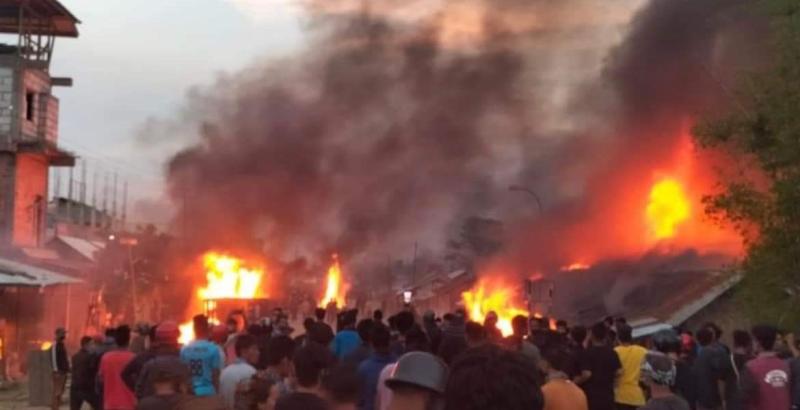
At least 130 people have been killed and more than 50,000 have fled their homes since the violence began. Tens of thousands have fled to government-run camps. Homes and churches in dozens of villages have been torched

In a detailed report to the Supreme Court in June, the civil society group Manipur Tribal Forum said many gruesome acts of violence, including rape and beheadings, had not been investigated by state authorities.

How have authorities reacted?

The main suspect in the sexual abuse case, identified as Khuirem Herodas, a Meitei, was arrested on Thursday.

He was taken into custody hours after Prime Minister Narendra Modi broke his nearly 80-day silence on the violence in Manipur by condemning the alleged sexual assault as “shameful” and promising tough action.

Also on Thursday, India’s Supreme Court said it was deeply disturbed by the viral video and asked the state and federal governments to inform the top court of the steps taken to catch the perpetrators.

If authorities do not act, “we will”, the court said.

Authorities in Manipur, led by Modi’s Hindu-nationalist Bharatiya Janata Party (BJP), said police had taken action as soon as the video surfaced on social media.

A “thorough investigation” was under way, the state’s chief minister, N Biren Singh, tweeted on Thursday.

“We will ensure strict action is taken against all the perpetrators, including considering the possibility of capital punishment.” he added.

How has the public reacted?

The video of the naked women sparked protests across India on Friday with demonstrators calling for the state’s chief minister to step down over the delay in taking action.
Women in Manipur, meanwhile, attacked the house of the main suspect.

“Local women pelted stones and burnt some parts of the house belonging to the prime accused in a village,” said Hemant Pandey, a senior police official in the state capital, Imphal.
Protests were planned in several parts of India by rights groups demanding justice and swift investigations into the latest incident to raise questions about the safety of women in India.

“What we are seeing in today’s Manipur is one of the darkest times in our history,” Binalakshmi Nepram, of the Northeast India Women Initiative for Peace, told Al Jazeera and other International News channels

“What has happened to our sisters – this and so many other unreported cases of sexual assault have been happening in the state of Manipur, not just from May 3 onwards but sexual assault and rape in conflict; rape has been used as a weapon of war.”


Source: ‘Local News Reports and Ground Reports’.

Design a site like this with WordPress.com
Get started